

Construction is officially underway on one of the largest airport infrastructure programs in Canadian history as Toronto Pearson International embarks on a decade-long, multi-billion-dollar effort to modernize facilities, expand capacity and prepare for the next generation of air travel.
The first phase, called the Long-term Investment in Facilities and Terminals program, will see $3 billion invested to renew aging infrastructure, introduce advanced technology and create more capacity for passengers, airlines and cargo operations.
Ground was formally broken this spring on the first construction package. The initial work will be focused on airside improvements and baggage systems, and laying the groundwork for a more efficient, sustainable and digitally enabled airport capable of handling future growth.
Deborah Flint, president and chief executive officer at Toronto Pearson, said the project is pivotal and marks the culmination of three years of planning, analysis, competitive procurement and collaboration with industry partners and air carriers.
Among the most significant upgrades is the installation of a new airfield lighting control and management system. The technology will improve visibility and aircraft guidance while creating an intelligent network capable of monitoring and responding to aircraft movement across runways and taxiways.
The project will also include major sustainability investments. Expanded electric vehicle charging infrastructure, cleaner heating systems and upgraded energy networks are planned as part of Pearson’s long-term strategy to reduce emissions and support greener airport operations.
Baggage handling, one of the airport’s most complex operational systems, will receive significant attention. Approximately 30 kilometres of baggage infrastructure will be upgraded, including the installation of new baggage carousels in Terminal 1.
Additional cameras and sensors will provide real-time monitoring and early detection of potential issues, helping operators identify and clear jams before they disrupt passenger service.
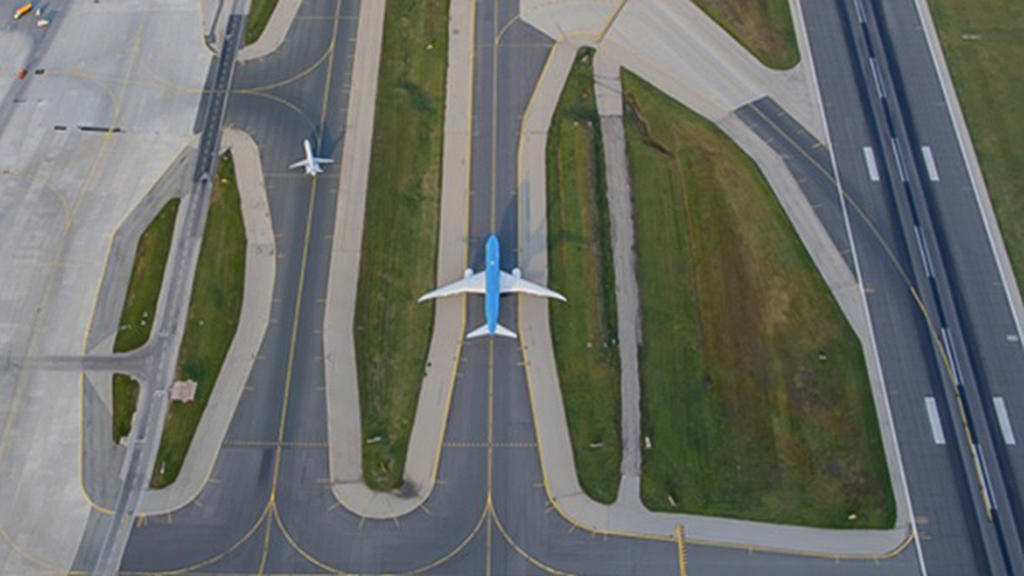
The most visible changes will occur on the airfield itself. Pearson plans to renew and expand its 2.2-million-square-metre airfield, an area roughly equivalent to more than 1,000 NHL-sized hockey rinks.
The work will include new aircraft stands and the construction of a high-speed taxiway that will improve aircraft movement between gates and runways.
Airport officials estimate these improvements alone will support up to 28,000 additional passengers per day while reducing delays and improving overall operational efficiency.
The current construction phase builds upon planning efforts that began several years ago. In 2024, the Greater Toronto Airports Authority initiated procurement discussions with hundreds of design, construction and technology firms to develop the program’s long-term vision and delivery strategy.
A key feature of the initiative is the use of a progressive design-build model. Under the model, designers, contractors and airport officials work together during the planning and design stages to better define project scope, costs and risks before major construction proceeds.
While the first phase focuses primarily on airfield and baggage improvements, it represents only the beginning of a broader transformation.
Additional investments and project details are expected to be announced in the coming months, including plans to revitalize and expand terminal facilities to accommodate long-term passenger demand.
According to independent economic analysis conducted by Oxford Economics, the improvements will enable the airport to handle 65 million passengers annually, create approximately 16,000 new jobs on airport grounds and support more than 160,000 jobs across Canada. The program is also expected to contribute roughly $30 billion to the economy and generate more than $10 billion annually in spending with Canadian suppliers.
Airport officials argue maintaining Pearson’s position as a major international hub is critical not only for travellers but also for Canada’s broader economy. Nearly half of the country’s air cargo passes through Pearson, while the surrounding airport employment zone supports hundreds of thousands of jobs and billions in economic activity.
The investments will help ensure airlines continue expanding service in Toronto rather than shifting routes and aircraft to competing North American hubs.
The project comes as Canada’s busiest airport faces increasing pressure from rising passenger volumes and aging infrastructure. Pearson handled approximately 45 million passengers in 2023 and now serves nearly 50 million travellers annually.
Airport forecasts suggest that figure could climb to the annual 65-million-passenger level by the early 2030s.
The work is necessary because existing airport facilities are approaching their limits. Wide-body aircraft traffic continues to increase, gate capacity is constrained and some travellers are already being transported to aircraft by bus because available gates are full.
“Our two main terminals are 20 and 30 years old, and they’re showing their age,� Flint wrote in a recent opinion piece outlining the need for investment.
While security screening has improved, she noted many spaces remain crowded and baggage systems require constant maintenance to keep operating. International connections can also be cumbersome because travellers often need to retrieve and recheck baggage between flights.
Recent Comments
comments for this post are closed