

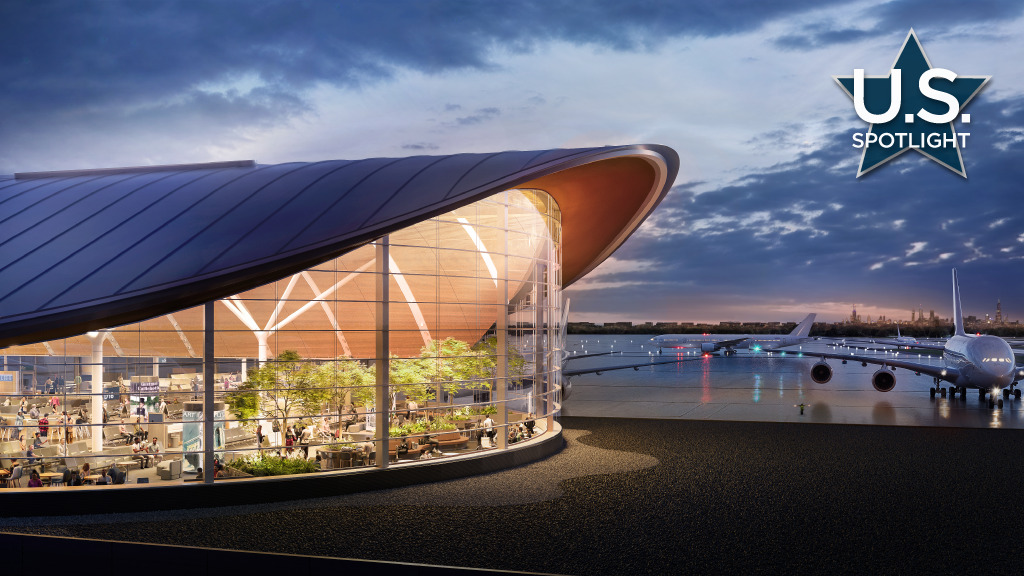
A small mountain of steel and concrete is beginning to rise at Chicago O’Hare International Airport as crews transition from groundwork to vertical construction on a massive new $1.3-billion Concourse D ProjectStatusUnder ConstructionValue$1.3BLocation10000 W O’Hare Ave, Chicago ILSectorPublic – CityTypeTransportation Terminals · New ConstructionData as of June 3, 2026.
The structure is the centrepiece of a multi-year $8.2-billion modernization program dubbed ORDNext in recognition of the original name of the venue – Chicago Orchard Airport – with the code ORD.
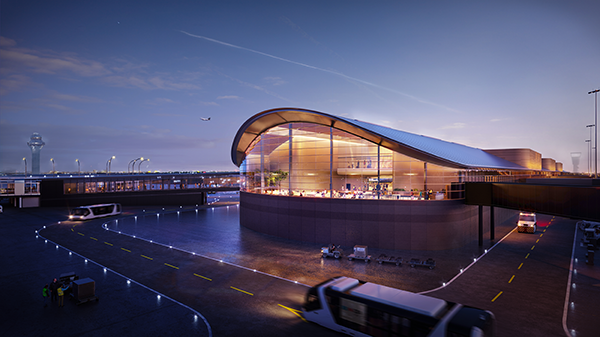
The concourse will be a 580,000-square-foot facility with 19 new gates, expanded passenger amenities and the infrastructure needed to support decades of future growth at one of the world’s busiest airports.
At the northern end of Concourse D, there will be a 40-foot-high atrium-like space connecting the three levels of the building.
City officials, aviation leaders and construction partners recently marked the milestone with a ceremonial first-beam signing, celebrating the start of a new phase that will see the structure begin to rise above the airfield after months of intensive site preparation and foundation work.
“Achieving O’Hare’s status as the world’s busiest airfield has taken years of planning,� said Chicago Department of Aviation commissioner Michael McMurray. “The start of vertical construction is a visible demonstration of our efforts to expand its efficiency and comfort in a fiscally responsible way.�
The project broke ground in 2025 and remains on schedule for completion in late 2028. Since construction began, crews have focused on creating the foundation for the future concourse. Approximately 35 per cent of foundation work has been completed, including more than 90 per cent of the deep foundation elements known as caissons.
Those massive reinforced concrete shafts, drilled deep into the ground, will support the weight of the new facility and help anchor the structure amid the heavy operational demands of a major international airport.
In the coming weeks, construction activity will become far more visible. Workers are preparing to install a 195-foot-tall tower crane near the center of the airfield, signaling the start of full-scale vertical construction on the 73-foot-tall concourse.
Designed by the Chicago office of Skidmore, Owings & Merrill in collaboration with Ross Barney Architects, JGMA and Arup, the new concourse draws inspiration from O’Hare’s origins as Orchard Field. The structural columns will branch outward to support the roof of the concourse while creating large, column-free interior spaces. Skylights and extensive glazing will flood the terminal with natural daylight, improving visibility and wayfinding for passengers.
At the northern end of the building an oculus in the roof will channel daylight deep into the structure, creating a bright gathering space surrounded by seating and landscaping.
When completed, Concourse D will offer gates designed primarily for narrow-body aircraft, with flexibility to convert 18 of them into nine wide-body gates as travel patterns evolve. Ìý
The passenger experience is also receiving significant attention. Plans call for more than 20,000 square feet of airline lounge space, 30,000 square feet of retail and dining areas and a 450-square-foot children’s play area.
Construction is being managed by a joint venture of AECOM Hunt, Clayco and Bowa.
The project is expected to generate approximately 3,800 construction jobs while creating opportunities for minority- and women-owned businesses and union apprenticeship programs.
The next major component of the ORDNext program will be Concourse E, a 460,000-square-foot satellite facility planned west of Concourse D. Primarily serving domestic flights, the facility will be connected to Concourse D through a multi-level underground tunnel system.
That tunnel network will play a critical role in the airport’s future operations. Beyond moving passengers between terminals via moving walkways, it will also house baggage-handling systems and secure employee corridors. The tunnel is being designed large enough to accommodate a future automated people mover should demand warrant it.
A key feature of ORDNext will be a new O’Hare Global Terminal, which will replace Terminal 2 and nearly double its size. Designed by Studio ORD, the facility will integrate domestic and international operations, creating smoother connections for passengers traveling on hub carriers American Airlines and United Airlines and their global alliance partners.
Supporting infrastructure work is already being planned alongside the terminal expansion. Beginning this year, crews will advance construction of a central cooling facility intended to serve all future ORDNext developments, while additional pavement, utility and airfield improvements will prepare the airport for subsequent phases.
In a statement, Chicago Mayor Brandon Johnson said the project is reinforcing O’Hare’s role as a global hub and engine of opportunity for the city.
“For over 70 years, O’Hare has been a key driver of the Chicago economy. This new phase of O’Hare’s expansion will launch the next 70 years of Chicago’s global business dominance and local career opportunities.�
Recent Comments
comments for this post are closed