


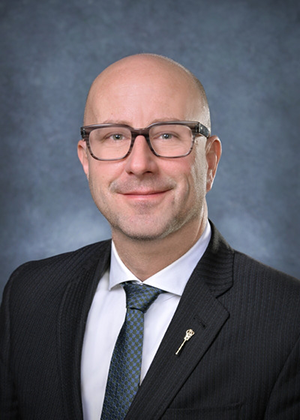
Construction in Saskatchewan is booming as government is on track to hit its $30 billion infrastructure investment goal set out in the 2030 Saskatchewan Growth Plan, said Sean Wilson, minister of SaskBuilds and procurement, with 2026-27 spending of $4.3 billion.
Broken down this is $1.8 billion by executive government and $2.5 billion by crown corporations.
“Things are good in Saskatchewan,” said Wilson, as the economy outperforms the national average.
But not everyone is happy with the government.
Roadbuilding contracts are slow getting out, said Shantel Lipp, Saskatchewan Heavy Construction Association president.
“We have several asphalt plants in the province that should be running and producing material but because of a slow rollout and lack of planning they are sitting idle,” she said.
Lipp explained Saskatchewan operates on a short construction season.
“When projects are tendered later in the year, contractors have less time to mobilize resources, secure materials, schedule crews and complete projects efficiently,” she said. “Delayed tendering increases risk, compresses construction schedules and can ultimately impact project delivery.”
The Canadian Taxpayers Federation has publicly called for Saskatchewan to reel in spending as debt soars.
Despite the criticism, Saskatchewan’s 20 major and 136 additionally planned capital expenditure program is joined by an aggressive private sector one. Currently, there are 60 major private projects proposed or under construction valued at $62 billion, Wilson said.
“Everywhere you look there is some form of investment occurring as well as our investment in infrastructure,” said Wilson.
Crown corporation major spending of $2.5 billion includes $1.7 billion in SaskPower’s electricity system, $433 million through SaskTel’s information and communications’ structures and $308.8 million in SaskEnergy’s transmission and distribution system.
Industry statistics to June 2025 found those employed in the construction industry rose from 42,700 people to 51,300 in one year with growth driven by new residents moving to the province, which has caused housing starts to increase by 84 per cent in the first six months of 2025.
The focus on construction has caused government to launch its new featuring Saskatchewan government projects and construction teams.
The website highlights the work performed by the company, architect and the engineer as well as the construction crew. The featured a Regina warehouse retrofit by Graham Construction and Engineering LP to become the new 70,000 square foot Research, Exhibits and Collection Facility for the Royal Saskatchewan Museum.
Wilson said the website acknowledges “the people who build for us.”
He is from the construction sector and is the grandson of late George Wilson, who 65 years ago, founded a roadbuilding company, G.W. Wilson Construction, where Wilson worked for 30 years prior to entering politics.
Wilson said projects are underway with $637.7 million going to health care infrastructure.
PCL Construction is at the mid-point on the new $850 million multi-storey acute care tower at Prince Albert’s Design-Build – Prince Albert Victoria Hospital ProjectStatusUnder ConstructionValue$898MLocation1200 24 St W, Prince Albert SKSectorPublic – State/ProvincialTypeMedical · Renovation, AdditionData as of June 2, 2026 with completion slated for 2028.
The team includes the KRA architectural team and Strategic Prairie Regional Alliance.
Other projects include Regina’s specialized long-term care (dementia and brain injury patients) facility, estimated to cost $56 million and to complete in fall 2028 under Calgary-based Graham Design Builders LP; and Design / Build – Weyburn General Hospital ProjectStatusAwardValue$80MLocation275 5 Ave SE, Weyburn SKSectorPublic – CountyTypeMedical · New ConstructionData as of June 2, 2026, a new $134 million facility, built by Wright Construction Western Inc.
Wilson said the government has also been actively constructing roads since coming into power in 2008 and has improved 23,000 kilometres of highway. The 2026-27 budget allocates $417.2 million for improving another 850 kilometres.
Lipp said while the province is highlighting one of the largest capital plans in recent history, “the reality is that investment in Saskatchewan’s highway network has declined, with the Highways Capital budget reduced by approximately $21 million.”
She said equally concerning is the peaks and slumps in government spending which makes it difficult for contractors to stabilize their fleets and they are looking elsewhere for work.
Wilson said his government remains committed to providing transportation infrastructure to grow the province and support the resource sector.
Wilson points to Bell Canada’s $1.7 billion data centre announced near Regina and a developing mining sector. The province is seeing proposed development in uranium and alumina, extracted from bauxite, but they require power.
Saskatchewan’s large deposit of alumina, equal to one-third of the world’s known supply, has been located near Tisdale, where Canadian Energy Metals is carrying out a 2026 pre-feasibility study and is looking to build a demonstration plant before developing the $6.3 billion Thor property.
The Saskatchewan government’s $1.7 billion North-South Transmission Systems Interconnection linking north and south power grids, announced in the budget, will support “new mining opportunities in our province’s resource rich north,” said a release.
Denison Mines Corp. and NexGen Energy Ltd. have proposed uranium projects that will create over 1,600 jobs during construction, employ over 700 people during operation and represent a total estimated investment of $2.8 billion.
The Canadian Taxpayers Federation, though, is calling on the Saskatchewan government to stop borrowing money as debt interest payments will cost taxpayers more than $1 billion in 2026. Yet, Morningstar DBRS, one of the world’s largest credit rating agencies, has said the province’s debt remains manageable because of its resilient economy.
Asked about the debt, Wilson said developing the economy will provide more taxation.
“Our people are growing the province and we are choosing to invest.”
Recent Comments
comments for this post are closed