

The B.C. government recently announced the province has adopted permanent, year-round daylight savings time (DST), to be called Pacific Time.
“Eliminating twice-yearly time changes reduces disruptions for families, simplifies scheduling and provides an extra hour of evening light during the winter months,” said a government announcement.
The switch means during winter months the sun won’t rise in the Lower Mainland for another hour, until about 9 a.m., instead of approximately 8 a.m., as it does under Standard Time.
For construction, that means one less hour of being able to work in daylight.
A brief, informal survey of B.C. construction shows a range of opinions on the switch.
The BC Construction Association (BCCA) welcomes the move.
“Stability and predictability matter in our industry,” it said in an announcement. “Eliminating the twice-yearly clock change removes an unnecessary disruption that can affect productivity and safety during those transition weeks.”
But the association has also qualified its support.
“However, construction often operates on daylight-driven schedules and safety is our top priority.
“Permanent DST will mean darker mornings during the winter months, and many crews start work early in the day when visibility is most important.”
Jordan Bateman, vice-president, communications and advocacy of the Independent Contractors and Businesses Association (ICBA), says, “Our members are still processing the switch and asking us if we had heard anything from the government in advance of the government announcement.
“Like the rest of B.C., ICBA was very surprised by the announcement. The government had zero consultation with us or with anyone that we have talked to.”
Bateman says the association wanted to be asked if permanent Pacific Time should be set to either DST or Standard Time, “because it makes a difference.”
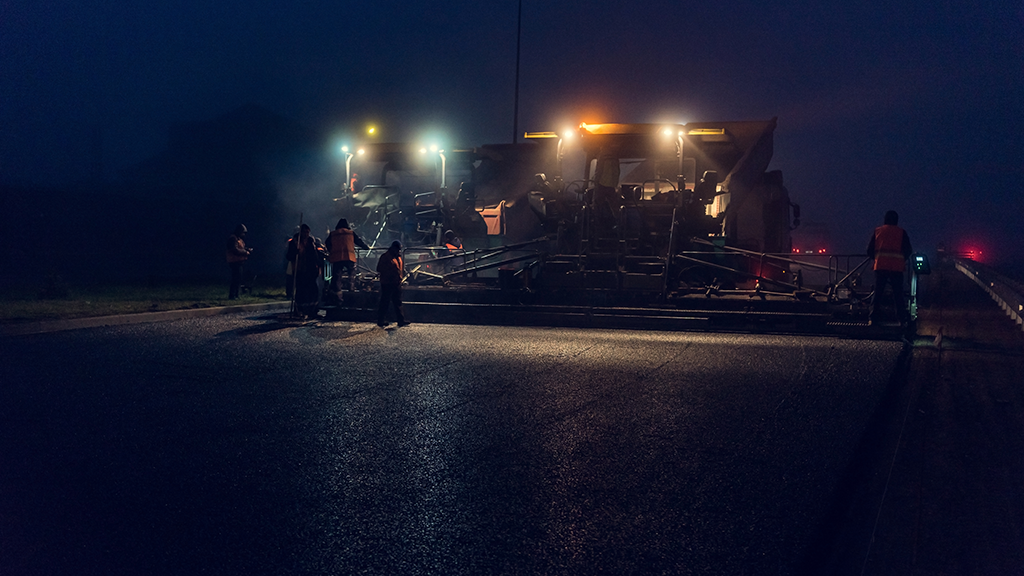
“Construction is primarily an outdoor activity, and it starts early in the morning,” says Bateman. “In the winter, after the switch, work will be done in the dark for two to two-and-a-half hours.”
On the other hand, Naikoon Contracting Ltd. president Joe Geluch says he hasn’t given any thought to the matter.
“Maybe I am naive, but I can’t see any effect, positive or negative,” said Geluch. “I think the field are working through winter months, often starting and ending in darkness, anyways.
“I guess the oldest trick in the book – of being an hour late on the switch-over days – won’t work anymore, so the crew will need to come up with something different next year!”
Brynn Bourke, executive director of the BC Building Trades Council, says it will be monitoring the transition closely and asking employers to review their safety protocols to reduce potential hazards.
“We’re connecting with members about the shift to permanent DST,” says Bourke.
“Construction workers start work very early in the morning,” she says. “This change will mean that members are spending more of their workday in the dark during the winter. That can impact visibility.”
Matt Pitcairn, president of BC Road Builders and Heavy Construction Association, says the association doesn’t expect the switch to have a major impact on the operations of its members.
“We’re used to working at all times of the day in all weather conditions and we make the appropriate adjustments,” says Pitcairn. “For example, paving must be done at night because there’s less traffic at night.”
The only possible glitch caused by the move to Pacific Time is if there is a disconnect between jurisdictions.
“That could lead to some administrative challenges of having to deal with different time zones,” says Pitcairn. “We’re looking to a formal alignment with all the West Coast jurisdictions (Alaska, Washington, Oregon, California).”
Simon Fraser University sleep researcher Dr. Myriam Juda says everyone in B.C., including construction workers, should be concerned about the switch to permanent DST.
“The B.C. government decided without consulting scientists on the subject,” says Juda. “There is a wealth of peer-reviewed data and analysis on the subject that is against permanent DST and says Standard Time is better aligned with our internal 24-hour clock.”
That internal clock, or circadian rhythm, regulates sleep-wake patterns, hormone release, digestion and body temperature in response to environmental cues like light and dark.
“Morning light is important because it acts as a natural alarm clock for the human body,” says Juda. “Less morning light will lead to more fatigue and increased danger of fatigue-related accidents.”
Permanent DST is not new. It was tried in the U.S. in 1974 for several months, but the experiment was abandoned after widespread dissatisfaction and reports of increased morning accidents.
“This is a long-term issue and we’re not going to get used to it, because of our human physiology,” says Juda.








Recent Comments
comments for this post are closed