

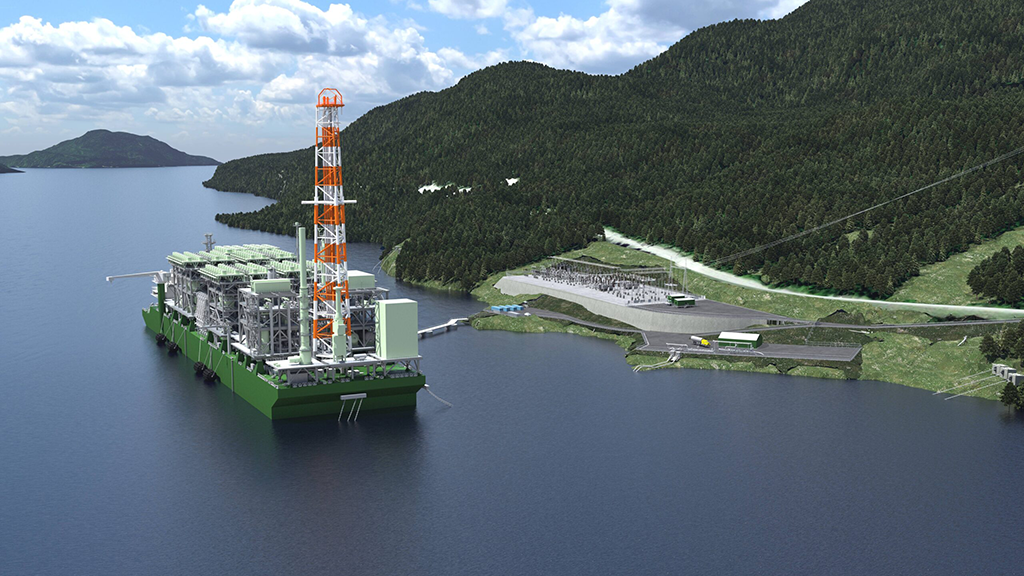
Construction is accelerating on the $4 billion Cedar LNG project near Kitimat, B.C., with major milestones now achieved on both the marine terminal and floating liquefied natural gas facility.
The project, a partnership between Haisla Nation and Pembina Pipeline Corp., is the world’s first Indigenous majority-owned LNG development and will be Canada’s first floating LNG export operation.
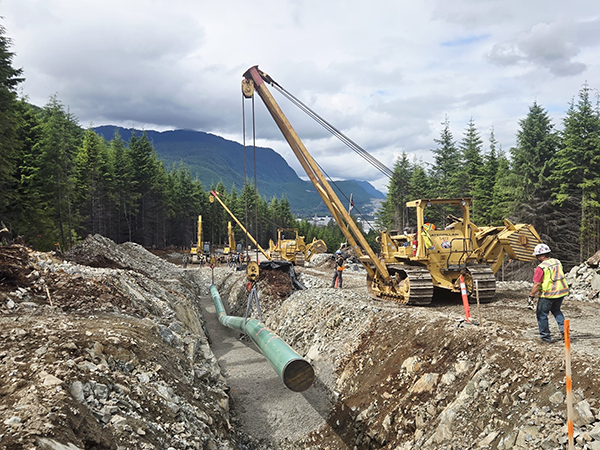
On the ground, crews recently completed the final weld on an eight-kilometre pipeline that will connect the facility to the Coastal GasLink system and supply natural gas to the floating LNG vessel. The achievement marks a critical step toward linking the marine terminal and processing infrastructure.
Project officials say the pipeline has now entered pressure testing and other verification procedures to ensure it meets all safety and engineering specifications. Once testing is complete, the line will be filled with nitrogen and remain in that state until the facility enters service in late 2028. Right-of-way restoration and cleanup activities will continue alongside the testing program.
The pipeline work is being led by Ledcor Haisla Limited Partnership, a joint venture that has played a central role in project construction and includes participation from Haisla Nation members.
Meanwhile, work is in full swing on the marine terminal.
Ledcor’s heavy civil division is carrying out site preparation, grading, drainage installation and access-road construction as part of the foundational work required before subsequent phases advance.
According to Ledcor, the company is delivering multiple major scopes under a unified construction approach across both the pipeline and marine terminal segments. Its overall scope on the Cedar LNG project remains on schedule for completion and handover in October.
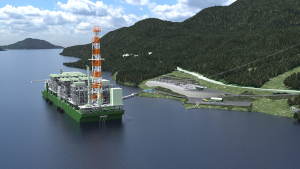
Overseas, construction of the project’s floating LNG vessel is also advancing rapidly at Samsung Heavy Industries’ shipyard in Geoje, South Korea.
A significant milestone was reached in June when the hull of the vessel was launched into the water. The facility, named megúgu, meaning Spirit of the Cedar Tree in the xa’isla language, is more than 50 per cent complete.
When it arrives in Kitimat in 2028, megúgu will become the first floating LNG facility ever deployed in Canada and among only a handful of such facilities operating worldwide.
The vessel is being built by Samsung in collaboration with engineering firm Black & Veatch. Once operational, natural gas delivered from the Cedar Link pipeline will be treated and cooled to minus 162 C, transforming it into a liquid for export to Asia-Pacific markets.
LNG carriers are expected to call at the facility every seven to 10 days, or up to 50 times annually, transporting Canadian natural gas through Douglas Channel to international customers.
The project’s marine and pipeline infrastructure are only part of a broader construction effort underway this year. Cedar LNG is also preparing to build a transmission line that will connect the facility to renewable electricity supplied by the BC Hydro grid.
Route clearing and site preparation are underway along the approved transmission corridor, which was selected in part to reduce environmental impacts by avoiding old-growth forest areas and sensitive wildlife habitat. The transmission infrastructure will enable the floating facility to operate using renewable power, helping reduce emissions and supporting Cedar LNG’s goal of maintaining one of the lowest carbon profiles in the global LNG industry.
At peak construction, Cedar LNG is expected to employ up to 500 workers.
With regulatory approvals already in place and construction progressing on multiple fronts, Cedar LNG remains on track for a late-2028 startup.
If successful, the development will become British Columbia’s third LNG export project after LNG Canada and Woodfibre LNG, while establishing a new model for Indigenous participation in major resource development.
Cedar LNG has set a goal of building a majority-local workforce during operations, which are expected to require approximately 100 full-time workers.
The first cohort of Haisla apprentices began on-the-job training this year at Pembina’s Prince Rupert Terminal propane export facility. Four Haisla members are currently gaining hands-on operational experience and technical training and are expected to transition into full-time positions aboard the floating LNG facility after graduation in 2028.
For the Haisla Nation, the facility is a landmark step in Indigenous ownership and leadership within Canada’s natural resource sector.
Community engagement has remained a key focus throughout construction. Earlier this year, Cedar LNG met with representatives from the District of Kitimat, emergency response agencies, WorkSafeBC, the B.C. Energy Regulator, LNG Canada and Rio Tinto to discuss construction schedules, environmental management and emergency preparedness planning.
“It was great to have so many community organizations and key stakeholders come together,” said Amanda Zinter, B.C. regulatory lead for Cedar LNG. “This project is built on collaboration and information sharing, so it’s always important to have time together to share our plans, hear feedback, and address questions so we can all be moving in the right direction together.”




Recent Comments
comments for this post are closed